A division of Anjio Property Marketplace Limited
Build your property portfolio
— without the headaches.
We make it easy to acquire UK property and build a stable, multi-property portfolio. We source, refurbish, let and manage every property for you — with a rental guarantee that means a missed payment is never your problem.
30 minutes. No obligation. Nothing to sign.
We build multi-property portfolios for clients
One starting capital invested. We buy, rent out, refinance — and buy more.
This is the mechanism for building a property portfolio quickly and sustainably — one that most first-time buyers never fully understand. Each cycle produces an owned asset, retained equity and an income-producing property, and returns most of the invested capital to the company account, ready to buy again.
For families
The decisions most families get wrong when investing.
Families with a child moving to a UK town for study or work can put a large sum of capital into buying a single property. But that property produces nothing, sits in one town, and depends on one set of local conditions for growth — for as long as your child is there, and often long after.
The same capital, structured differently, can hold several income-producing properties across different regions and let types, and your child still has a comfortable place to live. The difference is what the rest of it is doing while they do.
Position A — the usual route

One property. One town. One outcome.
Capital is committed in full and stays committed. No rental income while it is occupied by family. No second asset. Value moves only with that one local market. When the studies or work end, the decision returns — sell, let, or leave it standing.
Position B — a structured portfolio
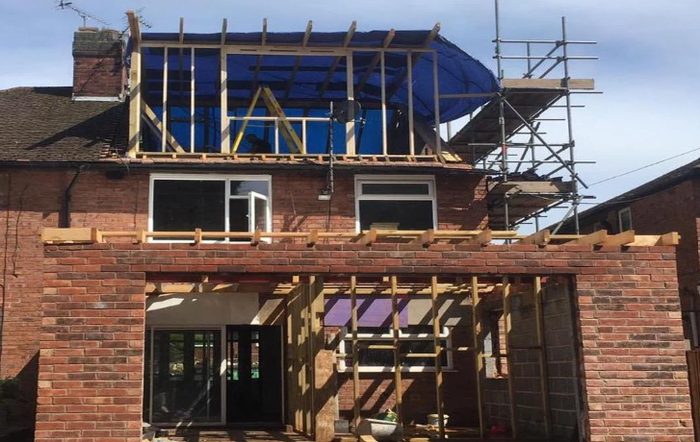


Several properties. Several regions. Income from day one.
Capital enters a UK company you own. Assets are bought below market where possible, improved, valued up and refinanced — releasing much of that capital to buy again. Family accommodation can sit inside the same structure. Everything is let and managed for you.
Illustrative only. Outcomes depend on market conditions, lending, timing and your own circumstances. This is not a forecast and not advice.
What the headlines leave out
Three things about UK property that rarely reach the front page.
Most of what investors read about the UK market is written for one audience: the small private landlord managing two flats themselves. Almost none of it describes how a structured portfolio is actually run.
Rent does not have to depend on a tenant paying it.
Whole categories of UK letting exist where the rent is not collected from an individual. Properties can be leased on multi-year agreements to local authorities and housing providers, who pay the rent whether the property is occupied or not, and who commonly carry the repairing obligations for the term. Separately, rent guarantee and legal-expenses products underwrite the income on standard lets. Which route fits depends on the asset, the area and your appetite — but "the tenant might not pay" is a solved problem in this market, not an accepted risk.
Removes: missed payments · void periods · chasing arrears from a distance
Your capital does not have to stay in the walls.
Buy an underperforming property below its value. Refurbish, convert or reconfigure it so it is worth materially more and earns materially more. Refinance against the new valuation, and a large share of the money you put in comes back out — while you keep the asset and the income. Then repeat. It is a standard UK strategy with a standard name, and it is the difference between capital that is spent and capital that keeps working.
Removes: money locked in one asset · one purchase per cycle of saving
The taxes you have read about are published, fixed and knowable.
You will have seen that UK landlords are taxed harder than they once were, and that some are leaving. Both are true. What the coverage omits is that every rate — stamp duty and its surcharges, corporation tax on rental profit inside a company, the treatment of interest — is set out in advance, applies equally to everyone, and can be modelled to the pound before you commit anything. There is no discretionary assessment and no surprise afterwards. Whether the arithmetic works for your situation is a question for a qualified tax adviser. We will introduce you to one. We will not answer it ourselves.
Removes: unpriced risk · arbitrary reassessment · unknowable cost of entry
From first call to first completion
Five steps. You approve each one.
Discovery call
Thirty minutes. Your objectives, your timeline, what you want the money to do and who it is ultimately for. We tell you honestly whether we are the right fit — sometimes we are not.
Strategy and structure
We agree the strategy mix and the regions. You are introduced to independent regulated professionals — tax, legal, compliance, finance — who advise you directly. Your UK company is formed in your name.
Site visits
Before any commitment, you visit live refurbishments and completed, tenanted properties, and meet the teams doing the work. Bring whoever you want with you.
Acquire and improve
We source and present deals with full numbers. You approve or decline each one. On approval we manage purchase, refurbishment, licensing and letting through to a tenanted, income-producing asset.
Refinance and repeat
Where the strategy calls for it, we manage the revaluation and refinance, and move to the next acquisition. Ongoing management and reporting continue for as long as you want them.
Straight answers
The questions people actually ask.
Do I need to be in the UK for any of this?
Whose name is on the property?
Does my money pass through your account?
Do you advise on tax, inheritance or mortgages?
Can I get UK finance if I am not resident here?
What if I only want to do one property?
What does it cost?
The next step
Thirty minutes will tell you whether this is worth your time.
No presentation, no pressure and nothing to sign. We will ask what you want the capital to do and who it is ultimately for, tell you plainly how we would approach it, and tell you if we are not the right people for it.
Book a discovery call